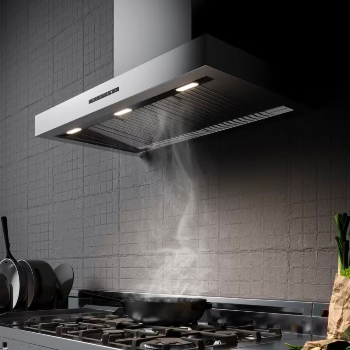
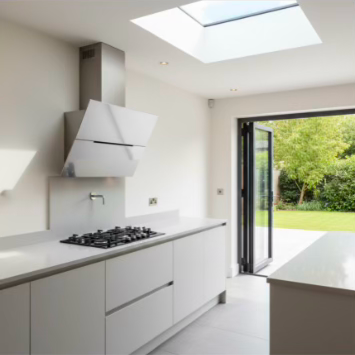
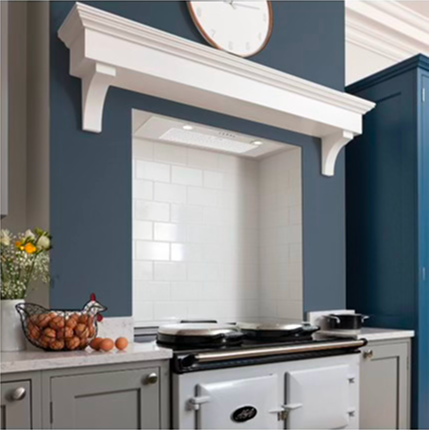
A cooker hood (also called a range hood or extractor hood) is the fan-and-vent appliance mounted above a hob or cooker. It captures cooking smoke, steam, grease and odours and vents them out or filters them . This greatly improves air quality in the kitchen. By removing grease and fumes, a hood keeps cabinets and walls cleaner, prevents lingering smells, and helps you cook without smoke choking you . Good ventilation also boosts safety: it clears moisture (to prevent Mold) and gas byproducts like carbon monoxide from gas stoves. In short, a cooker hood protects your health and home while letting you cook freely.
Ducted (Vented) Cooker Hoods
A ducted or vented hood takes air from above the stove and pushes it outside through ductwork. When you cook, the hood’s fan draws in smoke, steam, heat and grease from cooking and exhausts it outdoors via a pipe or chimney . Because the dirty air leaves your home, these hoods are very effective: they remove almost all smoke, moisture and some odours.
Advantages of a ducted hood include:
- Powerful ventilation. Ducted hoods clear out kitchen air efficiently. They carry away steam and grease fully outside, so heat and moisture don’t build up . This means fewer cooking smells or residues left behind.
- No filter replacement needed. Air is sent out directly, so you don’t need carbon filters for moisture removal. Only the washable grease filter needs occasional cleaning. There’s no regular filter-replacement cost .
- Excellent smoke/moisture removal. Experts rate external-vented hoods as “excellent” at clearing smoke and moisture (vs. only “good” for recirculating systems) . This makes them ideal if you cook often or fry foods that make a lot of smoke or grease.
However, ducted hoods have some downsides:
- Complex installation. Installing ductwork can be costly and disruptive. You usually must cut a vent hole in a wall, ceiling or roof, add a duct, and possibly modify cabinets or cabinets around the stove . This makes ducted hoods more expensive and time-consuming to install than ventless ones.
- Limited placement. Because a ducted hood needs a clear path to the outside, you can only install it where a duct can reach. Hoods must typically be on an exterior wall or below the attic/ceiling. That can limit your range of layouts (for example, an island cooktop is harder to vent) .
- Energy loss. Every time the hood vents air outside, it pulls some of your home’s heated or cooled air out too. In very cold or very hot climates, this can slightly raise heating or cooling bills. (Some installations add a makeup-air system to compensate.)
- Noise. Powerful ducted fans can be loud, especially on high speed. The fan may be inside the hood or even mounted externally, but heavy airflow tends to make noise . Proper insulation of ducts can help, but ducted systems are generally not the quietest option.
In summary, a ducted hood is best for heavy cooking and strong moisture removal. If your kitchen can accommodate it (and you don’t mind the installation), it will clear the air most effectively. When using Cooker hoods in ducting mode ensure a door or window is open to allow air in from the outside to replace air being ducted out.
Recirculating (Ductless) Cooker Hoods
A recirculating (ductless) hood also has a fan, but instead of venting air outside, it filters and returns it to the kitchen. Inside the hood you’ll find a grease filter (usually metal) and often an activated-charcoal filter to trap moisture . When cooking, air is pulled up through these filters: grease and particles are caught, moisture is absorbed by the charcoal filter, and the cleaned air blows back into the room. No ductwork is used.
This setup has its advantages:
- Easy installation and flexible placement. Since there is no need for ducts, installation is simpler and cheaper. You won’t have to cut holes in walls or ceilings. The hood can be placed almost anywhere above the stove (including islands or in a cabinet) . Many homeowners use ductless hoods in apartments or older homes where adding vents is impossible.
- Lower upfront cost. Without ductwork or complex installation, recirculating hoods cost less to buy and install .
- Quieter kitchen air. Because the fan isn’t fighting duct resistance or a long vent, some recirculating models run at lower noise levels inside the kitchen . (Note that some high-end models can still be quiet even if ducted, but in general recirculating hoods tend to be noisier only if the fan speed is high.)
- Energy efficiency. All the air (with its heat or coolness) stays in your home. In winter this can be a benefit, as you’re not venting warm indoor air outside .
But ductless hoods also have clear limitations:
- Less effective at removing steam and odours. Because air is not expelled outside, humidity and heat from cooking remain in the kitchen . Odours also aren’t eliminated as completely – the charcoal filter can only absorb so much scent. Experts rate their odour and smoke removal as “fair to good” compared to “excellent” for ducted systems . In practice, heavy frying may leave more lingering smell or grease residue.
- Lower overall airflow (Cubic Feet per Minute – CFM). The filters create resistance, so ductless hoods usually move less air per minute than ducted ones of the same size. This can make them slower to clear very smoky situations . If you do a lot of high-heat cooking, you may notice a recirculating hood struggles more with dense fumes.
- Ongoing maintenance. The filters must be cleaned or replaced regularly. Grease filters need washing every few months, and charcoal filters typically need replacement about every 6–12 months (depending on use) . Forgetting to maintain filters will sharply reduce performance. These extra filters also add a small long-term cost.
- No moisture removal. Because the hood recirculates, it does not vent out steam or humidity. The kitchen air stays more humid and warm, which could be uncomfortable in small or un-air-conditioned kitchens .
Overall, a ductless hood is best when ducts are impractical. It’s a good choice for light or moderate cooking in smaller kitchens, or rentals where you can’t install vents. Its ease of use and lower install cost are balanced by the fact that it won’t clear the air as completely. In this case there is no need to have a door or window open as the air is being re-circulated within the room.;
External Venting Systems
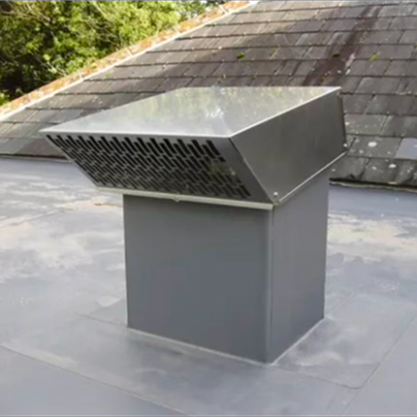
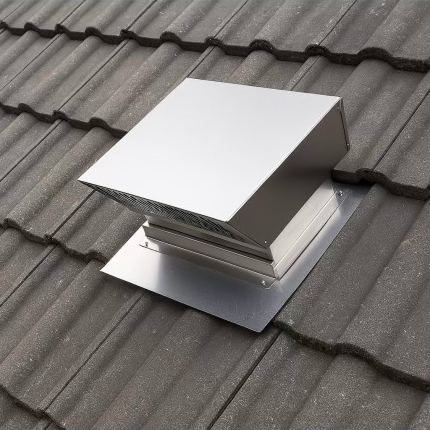
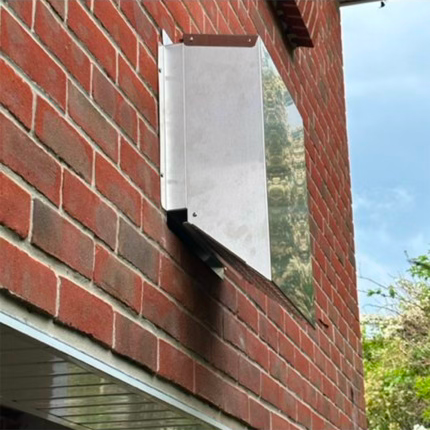
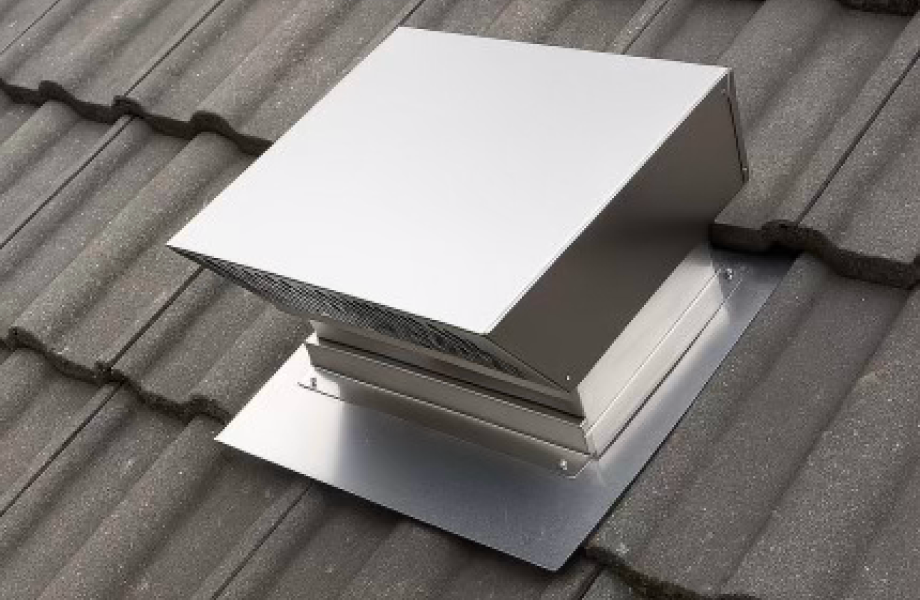
The term external venting system usually refers to setups that expel all cooking air outside the house, essentially a form of ducted hood. In many ways it overlaps with “ducted” above – the air leaves the building through a duct or chimney. What makes it distinct is that some external venting systems use a powerful blower unit outside or on the roof, with only the vent path passing through the house.
How it works: Like any vented hood, an external venting system draws cooking air up and pushes it outdoors. In these systems, the fan or motor may be mounted in the attic or on the roof, sending air out through a heavy-duty duct . (The hood above the stove connects by a relatively short duct to the external blower.) The result is very strong extraction of fumes and grease.
Pros: These systems offer all the benefits of ducted hoods – very effective smoke and odour removal (“excellent” in safety tables) , high airflow for powerful ventilation, and no need for filter replacements. Placing the fan outside can make the system quieter inside the kitchen (you hear less motor noise) and can allow very high CFM ratings for heavy-duty cooking.
Cons: They also share the drawbacks of ducted hoods, often more so. Installation is usually more complex and expensive than a regular ducted hood, since you must run a dedicated duct to the exterior and install an external fan unit . These systems are typically rated “high” difficulty and cost compared to internal systems . Noise can still be an issue: although the fan is outside, large blowers can transmit some noise back into the house, and the ductwork itself may vibrate or whistle if not well-sealed. Like all external vents, they must be placed where a roof or wall opening is possible, and they expel all the heated/cooled air from your kitchen. Maintenance involves the same grease-filter cleaning and duct checks as other vented hoods .
In summary, an external venting system is essentially a very powerful ducted hood. It removes cooking fumes extremely effectively , but at the cost of greater installation work, expense, and potential noise. These are often used in very high-end or commercial-style home kitchens, but are generally overkill for average home use.
Choosing the Right Hood for Your Kitchen
Picking the best hood depends on your kitchen layout, cooking habits, and priorities:
- Kitchen layout: Do you have access to an external wall or roof near the hob? If your cooktop sits along an exterior wall or under an attic/roof, a ducted or external-venting hood is possible. If your stove is on an island or surrounded by cabinets, ductwork may be hard to run. In that case, a ductless model might be the only practical option .
- Cooking style: If you frequently do high-heat cooking (frying, wok, grilling indoors) or use a gas range, an outside vent is usually better. It will whisk away grease, smoke and combustion fumes more completely . For light, occasional cooking or just boiling and simmering, a good recirculating hood is often sufficient.
- Building rules and neighbours: Apartments or condos often restrict venting kitchen air outside (to avoid steam on balconies, etc.). Check local regulations or lease rules. If external venting isn’t allowed, you’ll have to use a ductless hood or an approved make-up-air system.
- Budget and installation: If you’re on a tight budget, a ductless hood costs less up front (no duct to install) . But remember it has filter costs over time. Ducted hoods cost more to install (especially if new ducts are needed), but they typically have little maintenance cost beyond grease-filter cleaning.
- Maintenance willingness: Do you mind cleaning and replacing filters? If you prefer “set it and forget it,” a vented hood (ducted) is easier in the long run – just clean a metal grease filter occasionally. A ductless hood requires more frequent filter work .
- Energy and climate: In very cold climates, recirculating hoods can save on heating (since they keep warm air inside) . In warmer climates or open kitchens, the energy loss of venting outside may be less of an issue, making a ducted hood more appealing.
In short: If possible, a ducted/external-venting hood gives the best air quality. But if installing ducts is impractical, a modern recirculating hood still provides good grease and moisture control. Choose based on your kitchen’s constraints, how much cooking you do, and how much maintenance you’re willing to handle . For example, an apartment kitchen might use a sleek ductless hood for flexibility, while a family who cooks a lot of fried food would benefit from a powerful wall-vented or external-venting hood.
Comparing the Options
The table below summarises the key differences between ducted, ductless (recirculating), and external-venting cooker hoods:
| Feature | Ducted (Vented) Hood | Ductless/Recirculating Hood | External Venting System |
| Venting Path | Air is drawn up and sent outside through ducts | Air is pulled through grease and charcoal filters and returned to kitchen | Air is sent outside (often via a dedicated external blower); similar to ducted venting |
| Installation | Requires ductwork to outside (higher cost/complexity) | No duct needed (easier, lower-cost install) | Requires ductwork plus possibly external blower (very complex/costly) |
| Smoke &Moisture Removal | Excellent – expels nearly all smoke/grease | Moderate – filters trap grease and some moisture, but some odour can linger | Excellent – all air expelled (often highest power); rated “excellent” at smoke removal |
| Placement Options | Limited – must be near an exterior wall/ceiling | Flexible – can be installed almost anywhere above stove | Similar to ducted (needs a path outside); usually near wall/roof |
| Maintenance | Washable grease filter; periodic duct cleaning | Wash or replace grease and charcoal filters regularly | Washable filter and duct maintenance like ducted |
| Energy Use | Less efficient in winter (vents heated air out) | More efficient (keeps heat in) | Less efficient (vents air out, like ducted) |
| Noise | Can be loud on high power (fan inside) | Generally quieter in kitchen (no long duct) | Fan is outside (can be quieter inside) but large blower noise may be heard |
| Typical Cost | High upfront (duct installation); low filters cost | Low upfront; ongoing filter replacements cost | Highest (duct + external fan); maintenance similar to ducted |
Each home’s situation is different, so weigh these factors carefully.
TIP:
Switch on the cooker hood at least 20-30 minutes before you begin cooking to allow sufficient time for effective air circulation. After cooking, leave the cooker hood running for an additional 20-30 minutes to ensure that any residual odours and moisture are fully removed.
Bottom Line: For top performance, go ducted (external vent) if you can. For easy install and flexibility, choose ductless. And remember that even a good recirculating hood is much better than no ventilation at all.